
miércoles 07 de octubre del 2026
Notificación
  • Inicio
  • Principales
  • Nacionales
  • Internacionales
  • Economía
  • Regionales
  • Entretenimiento
  • Diario del Migrante
  • Política – Opinión
  • Variedades
Reporte Confidencial - AlertasReporte Confidencial - Alertas
Font ResizerAa
Buscar
  • Inicio
  • Principales
  • Nacionales
  • Internacionales
  • Economía
  • Regionales
  • Entretenimiento
  • Diario del Migrante
  • Política – Opinión
  • Variedades
Síguenos
© 2023 – Reporte Confidencial. Todos los derechos reservados – Administrada por: Omninexo

Portada » Internacionales » Fallece Henry Kissinger, el Nobel de la Paz que generó controversia al respaldar la «guerra sucia» con un alto costo en vidas en América Latina

InternacionalesPrincipales

Fallece Henry Kissinger, el Nobel de la Paz que generó controversia al respaldar la «guerra sucia» con un alto costo en vidas en América Latina

Reporte Confidencial
Última actualización: noviembre 30, 2023 6:58 am
Por Reporte Confidencial
Publicado noviembre 30, 2023
9 Min Lectura
Compartir
Compartir

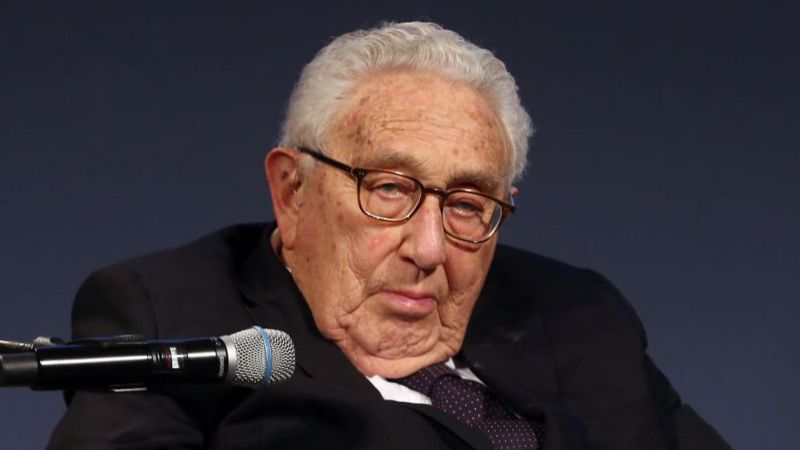
Henry Kissinger, one of the most emblematic figures of American diplomacy during the 1970s, passed away on Wednesday at the age of 100 at his home in Connecticut, according to his consulting agency, which did not provide a cause of death. As a strategist of US foreign policy during the turbulent 1960s and 70s, Kissinger held immense power. His name has been associated with nearly every major event of that time, from the Vietnam War to the US-Soviet Union confrontation. The paradoxes of his life were extraordinary. Despite being a controversial figure of the Cold War, he was awarded the Nobel Peace Prize in 1973. Often identified with anti-communist right-wing politics, he was the architect of the US-China rapprochement, bringing China out of isolation under Mao Zedong’s regime. Despite being born in Germany and speaking English with a strong foreign accent, he became one of the most recognizable symbols of Washington and its global power.

Henry Kissinger, who met with the Chancellor of the military regime that had taken power in Argentina three months prior, in June 1976, was asked if he minded speaking in Spanish because the Chancellor had difficulty with English. «Not at all,» responded Kissinger, then the Secretary of State of the United States and a global chess player, before breaking the ice with his Argentine interlocutor by announcing that he would attend the 1978 World Cup in their country, «no matter what happens.» «Argentina is going to win,» he predicted. The Chancellor, Admiral César Augusto Guzzetti, warned moments later that his country had problems with «terrorism» and the economy, and asked for US support for the military government. «We have been closely following the events in Argentina. We wish the new government the best and we will do everything possible to help it succeed,» responded Kissinger, according to a declassified US document about the conversation, which took place in Chile under Augusto Pinochet’s dictatorship. Shortly after, Kissinger gave Guzzetti another warning: «If there are things that need to be done, they should be done quickly. But you must quickly return to normal procedures,» he said in a statement that critics interpreted as a green light for the new Argentine regime to violate human rights. With these types of messages and policies, both in Latin America and the rest of the world, the US promoted its interests during the Cold War through Kissinger, one of the most influential and controversial diplomats of the 20th century, who passed away on Wednesday at the age of 100.

Henry Alfred Kissinger was born in Fürth, in Bavaria, Germany, on May 27, 1923, into a Jewish family that fled Nazi persecution and moved to New York when he was 15 years old. In 1943, the same year he became a US citizen, he was recruited by the US Army and became a German interpreter for counterintelligence during World War II. After the war, he returned to the US and entered the prestigious Harvard University on a scholarship, where he graduated with honors in Political Science in 1950. He obtained a master’s and a doctorate, and in 1954, he joined as a professor. His good academic reputation allowed him to enter the halls of politics when President Richard Nixon appointed him as his National Security Advisor in 1969 and Secretary of State in 1973. The veteran Republican politician and Harvard intellectual formed a pair that left a mark on US foreign policy with a series of unexpected and daring initiatives. In 1973, Kissinger shared the Nobel Peace Prize with the North Vietnamese diplomat Le Duc Tho.

Kissinger advocated for decision-making based on pragmatism and national convenience rather than ideological preferences. Among other things: He actively contributed to the normalization of US-China relations and was the architect of détente, or the policy of relaxation, with the Soviet Union. In 1973, his mediation between Israel and Egypt helped end the Yom Kippur War. He was also instrumental in the Paris Peace Accords to withdraw the US from the Vietnam War, which his government had prolonged, earning him the Nobel Prize alongside the North Vietnamese diplomat Le Duc Tho. However, his critics point out that he was responsible for atrocities such as the secret US bombings in Cambodia, accusing the nation of providing refuge to communist guerrillas from neighboring Vietnam. But Kissinger is a controversial figure not only for his role in US foreign policy but also for his personality. «He had that kind of cold-blooded and calculating approach to war and peace,» said David Greenberg, author of the book «Nixon’s Shadow: The History of an Image.» He possessed «all this intelligence, but without the moral or ethical foundation,» he added.

Latin America, where the Cold War often turned into a hot conflict, was one of the regions that experienced Kissinger’s influence firsthand. This has been evident through various declassified official documents published by the National Security Archive at George Washington University. These papers show, for example, that Kissinger told Nixon in 1970 that the democratic election of Chilean socialist President Salvador Allende was «one of the most serious challenges ever faced in this hemisphere.» Kissinger feared that the South American country would become an example of a «elected and successful Marxist government,» and he told the CIA director, Richard Helms, that Washington would prevent «Chile from going down the drain.» Days after Allende was overthrown by Pinochet in 1973, Kissinger spoke on the phone with Nixon about the military coup: «We didn’t do it. I mean, we helped,» he told the president. «We want to help, not undermine. You did a great service to the West by overthrowing Allende,» Kissinger personally told Pinochet in June 1976 when he was already Secretary of State under Gerald Ford’s administration following Nixon’s resignation due to the Watergate scandal. That meeting took place in Chile when concerns were growing worldwide about serious human rights violations by the Chilean regime. It was on that same trip that Kissinger met with Argentine Foreign Minister Guzzetti and expressed his support for the de facto government that launched a «dirty war» in which up to 30,000 people would be killed or disappeared. Other declassified US documents show that Kissinger, furious at the decision of then Cuban President Fidel Castro to send troops to Angola, outlined plans in 1976 to «crush Cuba» with airstrikes, which were never implemented.

After leaving the government in 1977, when Democrat Jimmy Carter assumed the US presidency, Kissinger founded the international consulting firm Kissinger Associates, which made millions by selling advice to large corporations. He also devoted himself to one of his passions, soccer, and as he had announced to Guzzetti, he personally traveled to the 1978 World Cup in Argentina, despite concerns expressed by the US ambassador in that country that his support for the military junta would harden its stance on human rights, just as the Carter administration was pressuring it to stop the repression. Kissinger never completely escaped the controversies he sparked. In May 2001, during a visit to Paris, a French judge summoned him to testify as a witness in an investigation into the coup and human rights violations in Chile, but the former Secretary of State refused to answer and left France. There were also attempts to involve him in proceedings in other countries…

Con información de efectococuyo.com

tags Síguenos en Google News y no te pierdas las mejores noticias

¡No te pierdas de nada!
Síguenos en Telegram o únete a nuestro canal de WhatsApp
FOTO PERFILADA CON IA
‎Urgente Polimariño: Habitantes identifican a roba casas en Costazul (Videos)
LATAM Airlines anunció que reanudará los vuelos directos entre Santiago de Chile y Caracas a partir del 3 de enero de 2027
Dua Lipa, inesperada estrella invitada en la residencia de Shakira para un dúo inédito
Comparte este artículo
Facebook Whatsapp Whatsapp LinkedIn Reddit Telegram Copiar enlace
Foto del avatar
PorReporte Confidencial
Seguir
Reporte Confidencial es un portal de noticias fundado el 08 de mayo de 2006, con el objetivo de garantizar la participación del periodismo civil en su plataforma. RC tiene decenas de miles de lectores, mas de 500 mil seguidores en redes sociales y ocupa espacio preferencial en Venezuela.

¡No Te Lo Pierdas!

¡Atención! Bono Único Familiar octubre 2026: Este sería el nuevo monto y cuándo pagan
¡Atención! Bono Único Familiar Octubre 2026: Este sería el nuevo monto y cuándo pagan
Economía Bonos Principales
octubre 4, 2026
Identifican a la asesina de niña margariteña en Chicago
Regionales Internacionales Nueva Esparta Principales
octubre 4, 2026
Vecinos de Doña Elisa piden investigar tenencia de animales +VIDEO
Regionales Nueva Esparta Principales
octubre 5, 2026
Niña oriunda de Villa Rosa es asesinada en Chicago
Regionales Nueva Esparta Principales
octubre 4, 2026
Cronograma de bonos del Sistema Patria del 5 al 10 de octubre
Bonos Dólar BCV Economía
octubre 6, 2026
Tragedia familiar en el condado Orange: Padre asesina a sus hijos gemelos y se quita la vida
Internacionales Principales
octubre 5, 2026
Entre 10 y 15 vehículos se ven involucrados en choque múltiple en la ARC
Nacionales
octubre 4, 2026
Shavon Gayden: Mujer acusada de asesinar a un niña venezolana en Chicago tenía antecedentes penales
Shavon Gayden: Mujer acusada de asesinar a una niña venezolana en Chicago tenía antecedentes penales
Internacionales Principales
octubre 6, 2026

Anunciantes

En ILC Consultores – Braulio Jatar & Asociados creemos en la defensa de los derechos de inmigrantes
Publirreportaje Internacionales Principales
Mi propuesta es que la nueva Venezuela tenga un ministro de la diáspora, con competencias reales, presupuesto, capacidad de representación internacional y responsabilidad directa frente a esos millones de venezolanos. La magnitud del fenómeno ya justifica una institución del más alto nivel del Estado.
Venezuela necesitará un ministro de la diáspora
Principales Política y Opinión Publirreportaje
Por Braulio Jatar Alonso ETL
De Irene Sáez, Miss Universe, al Maduro de Trump Por Braulio Jatar Alonso ETL
Política - Opinión Principales Publirreportaje
Por Braulio Jatar Alonso (NotiAmerica) Hay una expresión que Chile debería comenzar a conocer: terrorismo estocástico. No es una figura penal. Es un concepto utilizado para describir cómo determinados discursos públicos, repetidos de manera constante contra un grupo, pueden aumentar la probabilidad de que alguien termine actuando violentamente contra sus integrantes. No hace falta ordenar una agresión. Basta construir un enemigo, atribuirle los problemas de la sociedad y repetir suficientemente el mensaje. No sabemos quién actuará ni cuándo, pero se crea el ambiente para que ocurra. Eso me preocupa cuando observo parte del debate migratorio chileno. Un reciente proyecto de ley ingresado por los senadores Iván Flores, Danisa Astudillo, Paulina Núñez y Paulina Vodanovic busca sancionar penalmente los matrimonios y acuerdos de unión civil celebrados con fines migratorios. La iniciativa aparece después de conocerse que los AUC entre chilenos y extranjeros aumentaron significativamente entre 2024 y 2025. Sus promotores sostienen que podrían existir personas que utilicen estos vínculos para obtener beneficios migratorios e incluso redes que intermedian, a cambio de dinero, para producir uniones ficticias. Si existe fraude, que se investigue y se sancione. Esa discusión es perfectamente legítima. El problema comienza cuando una estadística se utiliza para sembrar sospechas sobre las relaciones entre chilenos y extranjeros. Que aumenten los matrimonios o los acuerdos de unión civil interculturales no demuestra que exista fraude. He dicho públicamente que este tipo de iniciativas forma parte de una estrategia que termina dificultando y estigmatizando los vínculos entre personas de distintas culturas. Ni los números conocidos ni los casos efectivamente comprobados parecen suficientes para sostener semejante sospecha generalizada. Cuando la condición de extranjero comienza a convertirse por sí misma en motivo de desconfianza, estamos entrando en un terreno peligroso. Eso es, derechamente, racismo. Primero se construyó la imagen del inmigrante como responsable de la delincuencia. Después llegó el “irregular” presentado como amenaza. Ahora incluso el matrimonio o la unión civil pueden ser observados desde la sospecha. Así funciona el terrorismo estocástico. Cuando dirigentes políticos, medios y comunicadores repiten constantemente que determinado grupo es peligroso, fraudulento o indeseable, contribuyen a crear un clima social donde la discriminación y eventualmente la violencia se vuelven más probables. Chile tiene todo el derecho a combatir el fraude migratorio. Lo que no tiene derecho es a convertir al inmigrante en sospechoso permanente. Porque las palabras pronunciadas desde posiciones de poder tienen consecuencias. Y quien siembra sistemáticamente miedo contra un grupo humano nunca puede saber quién terminará convirtiendo ese miedo en odio, ni quién finalmente decidirá actuar.
El terrorismo estocástico contra los inmigrantes en Chile
Publirreportaje Política y Opinión Principales

También podría gustarte

Inicia pago del Bono de Corresponsabilidad y Formación de octubre 2026
BonosDólar BCVEconomíaPrincipales

Inicia pago del Bono de Corresponsabilidad y Formación de octubre 2026

Por Zenaida Mercado Romero
2 Min Lectura
Colegio Pablo Romero Millán PROMO 20 EDITION - VOL.1
Nueva EspartaPrincipalesVariedades

Colegio Pablo Romero Millán PROMO 20 EDITION – VOL.1

Por Zenaida Mercado Romero
1 Min Lectura
Premio Nobel de Física 2026: Francis Halzen gana por detectar «partículas fantasma» desde la Antártida
NacionalesPrincipales

Premio Nobel de Física 2026: Francis Halzen gana por detectar «partículas fantasma» desde la Antártida

Por Zenaida Mercado Romero
3 Min Lectura
Inameh prevé lluvias dispersas este lunes en gran parte del país durante horas de la tarde
NacionalesPrincipales

Inameh prevé lluvias dispersas este lunes en gran parte del país durante horas de la tarde

Por Zenaida Mercado Romero
2 Min Lectura
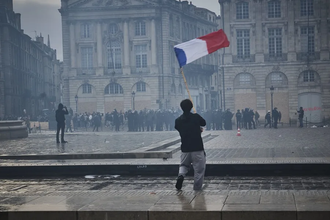
Protestas estudiantiles en Francia: 90.000 manifestantes y tres días de movilizaciones paralizan varias ciudades
InternacionalesPrincipales

Protestas estudiantiles en Francia: 90.000 manifestantes y tres días de movilizaciones paralizan varias ciudades

Por Zenaida Mercado Romero
4 Min Lectura
Banco Central de Venezuela fija el precio del dólar en 872,39 Bs. para este 6 de octubre
EconomíaDólar BCVPrincipales

Banco Central de Venezuela fija el precio del dólar en 872,39 Bs. para este 6 de octubre

Por Zenaida Mercado Romero
2 Min Lectura
Anterior Siguiente
Logo reporte confidencial - dorado sin bg Logo reporte confidencial - dorado sin bg

Noticias de Venezuela: cronograma de gasolina, Bonos Patria, IVSS, MPPE, sucesos y más. Calendario de pagos del Sistema Patria #DolarToday – Somos la Red Social Informativa Nº1 de Venezuela | Premio Jesús Rosas Marcano | Reportamos la verdad que otros no publican | Periodismo Investigativo Audaz

Nosotros

  • Términos y condiciones
  • Declaración de Privacidad de Reporte Confidencial
  • Descargo de responsabilidad
  • Política de Cookies de Reporte Confidencial
© 2023 – Reporte Confidencial. Todos los derechos reservados – Administrada por: Omninexo
Welcome Back!

Sign in to your account

Username or Email Address
Password

¿Perdiste tu contraseña?